No products in the cart.


Need Help?
+8801822361899
Sign In
Registration complete. Please check your email.
Create an account
The user name or email address is not correct.
Reset password
Password reset email has been sent.
The email could not be sent. Possible reason: your host may have disabled the mail function.
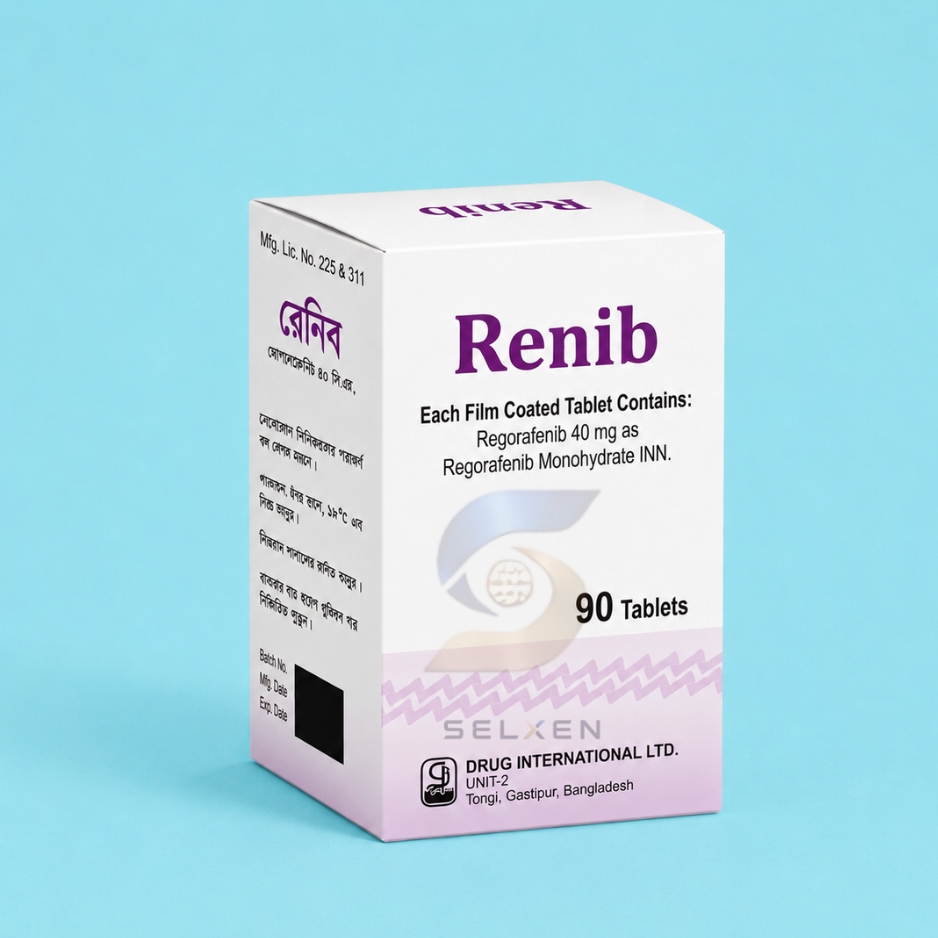
Renib 40 mg (Regorafenib)
- Disclaimer : Before purchasing any medicine, always verify whether there is a valid drug license.
How to Know the Original Drug Products?
Check the packaging for clear printing, correct spelling, and the official logo. Verify batch numbers, manufacturing dates, expiry dates, and prices on the box and blister. Ensure seals and foils are properly intact. Finally, confirm the brand name, strength, and dosage form through reliable official medicine records before use.
Introduction
Renib 40 mg contains regorafenib, an oral prescription medicine belonging to the multikinase inhibitor class. It is used under specialist medical supervision for certain advanced cancers, including selected cases of metastatic colorectal cancer, gastrointestinal stromal tumor (GIST), and hepatocellular carcinoma (HCC), depending on the patient’s previous treatment and clinical circumstances. Each Renib tablet contains 40 mg of regorafenib. The medicine is manufactured by Drug International Ltd.
Because regorafenib can cause important adverse reactions and may interact with other medicines, treatment should be prescribed and monitored by an appropriately qualified healthcare professional. Patients should follow the dosing schedule provided by their oncologist and should not change, interrupt, or restart treatment without medical advice. If you have a valid prescription and want to source Renib 40 mg, Selxen can provide a route to check product availability and prescription requirements before an order is processed.
| Product Information | Details |
|---|---|
| Product name | Renib 40 mg |
| Generic name | Regorafenib |
| Strength | 40 mg |
| Dosage form | Tablet |
| Drug class | Multikinase inhibitor |
| Product type | Prescription medicine |
| Manufacturer | Drug International Ltd. |
| Primary medical specialty | Oncology |
Renib 40 mg is a brand of regorafenib. The brand name identifies the marketed product, while regorafenib is the active drug responsible for its pharmacological effects. The appropriate use of regorafenib depends on the cancer diagnosis, previous treatments, overall health, laboratory results, and the treating specialist’s assessment.
What Is Renib 40 mg?
Renib 40 mg is a prescription oncology medicine containing regorafenib. Regorafenib is a small-molecule multikinase inhibitor that affects several protein kinases involved in tumor-cell signaling, tumor blood-vessel formation, and tumor microenvironment processes. It is not appropriate for every type or stage of cancer. Its use depends on specific approved indications and, in several settings, treatment received previously. Because treatment can require dose interruptions or reductions due to adverse reactions, regorafenib should be used under the supervision of an oncologist or another qualified healthcare professional.
What Is Renib 40 mg Used For?
Renib 40 mg (regorafenib) is used for selected adults with certain advanced cancers, including metastatic colorectal cancer, unresectable or metastatic GIST, and hepatocellular carcinoma after specified previous treatment.
Metastatic Colorectal Cancer
Regorafenib may be used in selected adults with metastatic colorectal cancer (mCRC) whose disease has progressed after certain standard systemic therapies or who are not suitable for them. Depending on the clinical situation, previous treatment may have included chemotherapy based on fluoropyrimidines, oxaliplatin, or irinotecan, as well as appropriate targeted therapies. The decision to use regorafenib is made by the treating oncologist based on the patient’s treatment history and overall clinical condition.
Gastrointestinal Stromal Tumor
Regorafenib is also used for certain adults with unresectable or metastatic gastrointestinal stromal tumor (GIST) after disease progression or intolerance to previous treatment with medicines such as imatinib and sunitinib. GIST is a type of soft-tissue tumor that commonly develops in the gastrointestinal tract.
Hepatocellular Carcinoma
Regorafenib may also be used in appropriately selected adults with hepatocellular carcinoma (HCC) who have previously received sorafenib, according to applicable prescribing information. Treatment selection depends on factors such as previous therapy, liver function, performance status, and the overall clinical situation.
How Does Regorafenib Work?
Regorafenib works by inhibiting multiple protein kinases involved in cancer-cell signaling and the development of blood vessels that can support tumor growth.
Its activity includes inhibition of several kinase pathways, including targets associated with:
- VEGFR
- TIE2
- KIT
- RET
- RAF
- PDGFR
- FGFR
By affecting multiple signaling pathways, regorafenib can interfere with processes involved in tumor proliferation and angiogenesis. The exact clinical effect varies between patients and depends on the type and biology of the cancer. Regorafenib should therefore not be described as a universal cancer treatment or as a medicine that guarantees tumor shrinkage.
Regorafenib 40 mg Dosage and Administration
Standard Starting Dose
The standard adult starting regimen of regorafenib for its approved indications is generally:
160 mg once daily for the first 21 days of a 28-day treatment cycle. With 40 mg tablets, 160 mg corresponds to four 40 mg tablets taken once daily. The remaining 7 days are a treatment break. The dose may need to be reduced, interrupted, or permanently discontinued depending on adverse reactions, laboratory results, treatment response, and the patient’s clinical circumstances. Do not change your dose yourself. Any dose adjustment should be determined by the treating healthcare professional.
Example Treatment Schedule
A typical cycle can be understood as:
Days 1–21: Regorafenib treatment
Days 22–28: No regorafenib
Day 29: Next cycle begins, if treatment is continued
The exact treatment plan can vary according to the prescribing information and the patient’s medical needs.
How to Take Renib 40 mg
Regorafenib should generally be taken:
- By mouth.
- Once daily according to the prescribed schedule.
- At approximately the same time each day.
- With a low-fat meal.
- With water.
Follow the specific instructions supplied with your medicine and those provided by your healthcare professional. Do not take additional tablets to compensate for a missed dose unless your healthcare professional specifically instructs you to do so. If you vomit after taking a dose, contact your healthcare team for advice rather than automatically taking another dose.
Available Strengths
For this product page:
Renib 40 mg — 40 mg regorafenib per tablet
The number of tablets required for a prescribed dose depends on the prescribed regimen. Patients should not attempt to calculate or alter their dose independently. If you need a different strength, pack configuration, or quantity, contact Selxen to confirm current availability.
Available Pack Sizes
The available pack size should be confirmed against the current product packaging and Selxen inventory before publication or ordering. Do not display an unverified pack quantity on the product page.
For international pharmaceutical supply, packaging and market presentation can differ. Customers should confirm:
- Pack quantity
- Strength
- Manufacturer
- Batch/lot information
- Expiry date
- Packaging language
- Market-specific labeling
before completing an order.
Who Can Use Renib 40 mg?
Renib 40 mg is intended for patients for whom regorafenib has been prescribed by an appropriate healthcare professional for an approved or otherwise medically appropriate indication.
Suitability depends on factors including:
- Cancer type and stage
- Previous cancer treatments
- Liver function
- Cardiovascular health
- Blood pressure
- Current medicines
- Previous adverse reactions
- General health and performance status
A product page cannot determine whether regorafenib is appropriate for an individual patient.
Who Should NOT Use Renib 40 mg?
Do not use Renib 40 mg if you have been advised by your healthcare professional that regorafenib is unsuitable for you or if you have a known contraindication to the medicine or its ingredients.
Before treatment, tell your doctor or pharmacist about:
- Allergies to medicines or ingredients
- Liver problems
- High blood pressure
- Heart disease
- Previous heart attack or ischemic events
- Bleeding problems
- Recent surgery
- Planned surgery
- Wound-healing problems
- All prescription and non-prescription medicines you take
- Pregnancy or plans to become pregnant
- Breastfeeding
Your healthcare professional can determine whether treatment is appropriate.
Warnings and Precautions
Regorafenib can cause serious adverse reactions. Appropriate monitoring is therefore an important part of treatment.
Liver Problems
Regorafenib can cause liver injury, including serious hepatotoxicity. Your healthcare professional may perform blood tests to monitor liver function before and during treatment.
Seek prompt medical attention if you develop symptoms that could indicate liver problems, such as:
- Yellowing of the skin or eyes
- Dark urine
- Unusual tiredness
- Loss of appetite
- Abdominal discomfort
- Unexplained nausea or vomiting
Do not ignore new or worsening symptoms during treatment.
High Blood Pressure
Regorafenib may increase blood pressure. Blood pressure should be monitored during treatment, particularly during the early stages. Patients with poorly controlled hypertension should discuss this with their healthcare professional before treatment.
Bleeding
Regorafenib can increase the risk of bleeding. Tell your healthcare professional if you experience unusual bleeding, blood in the stool or urine, prolonged bleeding, or unexplained bruising. Seek urgent medical attention for severe or uncontrolled bleeding.
Hand-Foot Skin Reaction
A hand-foot skin reaction can occur during regorafenib treatment.
Possible symptoms include:
- Redness
- Swelling
- Pain
- Tenderness
- Skin thickening
- Blistering
- Discomfort while walking or using the hands
Report symptoms early. Your healthcare professional may recommend supportive treatment or adjust the regorafenib dose if necessary.
Heart and Cardiovascular Problems
Regorafenib has been associated with cardiovascular adverse reactions, including ischemic events. Tell your healthcare professional about any history of heart disease or cardiovascular risk factors. Seek urgent medical attention for symptoms such as chest pain, severe shortness of breath, or other signs of a possible cardiovascular emergency.
Wound Healing and Surgery
Regorafenib can interfere with wound healing. Tell your healthcare team if you have recently undergone surgery or are planning to have surgery. Your healthcare professional may recommend temporarily stopping treatment around certain procedures.
Possible Side Effects of Renib 40 mg
Regorafenib can cause adverse effects, although not everyone experiences them.
Reported adverse reactions include:
- Fatigue
- Diarrhea
- Decreased appetite
- Weight loss
- Hand-foot skin reaction
- Hypertension
- Changes in voice
- Nausea
- Mouth or throat problems
- Skin reactions
- Infection
- Abdominal pain
Some adverse reactions can be serious.
Particularly important risks include:
- Severe liver injury
- Serious bleeding
- Severe hypertension
- Cardiovascular ischemic events
- Gastrointestinal perforation or fistula
- Severe skin reactions
- Impaired wound healing
This list is not exhaustive.
Do not stop regorafenib solely because you experience a side effect without speaking with your healthcare professional. Your treatment team can determine whether supportive treatment, dose modification, interruption, or discontinuation is appropriate.
Regorafenib Drug Interactions
Tell your doctor and pharmacist about every medicine, supplement, and herbal product you use. Regorafenib is metabolized through pathways including CYP3A4 and UGT1A9, so medicines that affect these pathways may alter regorafenib exposure.
Potentially relevant medicines can include:
- Certain antifungal medicines
- Some antibiotics
- Certain seizure medicines
- Other cancer medicines
- Anticoagulants
- Medicines affecting liver enzymes
- Herbal supplements
This does not mean that every medicine in these categories is incompatible with regorafenib. Your healthcare professional should review your complete medication list before treatment begins and whenever a medicine is added or discontinued.
Pregnancy and Breastfeeding
Regorafenib may cause fetal harm.
Tell your healthcare professional if you are:
- Pregnant
- Planning a pregnancy
- Breastfeeding
- Planning to father a child
Appropriate contraception should be discussed with your healthcare professional. Breastfeeding is generally not recommended during regorafenib treatment and for the period specified in the applicable prescribing information after the final dose. Because reproductive recommendations can be clinically important, patients should follow the current product labeling and advice from their healthcare professional.
Monitoring During Regorafenib Treatment
Your healthcare team may monitor:
- Liver function
- Blood pressure
- Signs of bleeding
- Skin and hand-foot reactions
- Cardiovascular symptoms
- Other treatment-related adverse effects
- Overall response and tolerance
The frequency and type of monitoring depend on your clinical circumstances. Regular follow-up is particularly important because some serious adverse reactions may require treatment interruption or dose modification.
Storage Instructions
Store Renib 40 mg according to the instructions provided on the current product packaging.
General medicine-storage principles include:
- Keep the medicine out of reach of children.
- Keep tablets in their original packaging unless your pharmacist gives different instructions.
- Avoid inappropriate exposure to heat or moisture.
- Check the expiry date before use.
- Do not use damaged or improperly stored medicine without first asking a pharmacist.
For market-specific storage requirements, follow the product label and accompanying package information.
Renib 40 mg Manufacturer
Drug International Ltd. manufacturer information is important when verifying a pharmaceutical product because the brand, strength, dosage form, packaging, and manufacturer should correspond with the medicine supplied. For international orders, customers should confirm the product presentation and labeling before purchase.
Prescription Requirements
Renib 40 mg is a prescription medicine. Because regorafenib is a systemic oncology medicine with potentially serious adverse effects, it should be used under appropriate medical supervision. A valid prescription or other required documentation may be requested before an order can be processed, depending on the applicable jurisdiction and Selxen’s ordering requirements. Do not purchase or use regorafenib for self-treatment without medical evaluation. If you already have a prescription, you can contact Selxen to confirm the required documentation and product availability.
Shipping and Delivery
Availability, shipping options and delivery times can vary according to:
- Destination country
- Product availability
- Prescription verification
- Regulatory requirements
- Customs procedures
- Courier service
- Product sourcing
For this reason, avoid publishing an unconditional delivery guarantee unless Selxen can reliably provide it. Check current Renib 40 mg availability and shipping options before placing an order.
Why Buy Renib 40 mg Through Selxen?
Choosing a pharmaceutical supplier should involve more than simply comparing a product price.
For a prescription oncology medicine, customers should look for:
- Clear product identification
- Manufacturer transparency
- Prescription verification
- Appropriate customer support
- Secure handling of customer information
- Transparent ordering procedures
- Clear availability information
- Responsible pharmaceutical communication
Selxen should make these elements visible throughout the ordering process.
Need help before ordering?
If you have a prescription for Renib 40 mg but want to confirm the product, strength, availability or documentation required, contact Selxen before placing your order.
Check Availability
Request Prescription Verification
Contact Our Pharmacist
Important Medical Disclaimer
The information on this page is intended for general educational purposes and should not replace advice from an oncologist, physician, pharmacist, or other qualified healthcare professional. Regorafenib is a prescription medicine and may cause serious adverse reactions. Do not start, stop, or change your dose without professional medical advice. Always follow the current prescribing information supplied with the medicine and the instructions provided by your healthcare professional.
Conclusion
Renib 40 mg (Regorafenib) is a prescription multikinase inhibitor used in selected patients with certain advanced cancers, including metastatic colorectal cancer, GIST, and hepatocellular carcinoma in specified treatment settings. Because regorafenib can cause significant adverse reactions and interact with other medicines, appropriate patient selection, dosing, monitoring, and medical supervision are essential. The standard adult starting regimen is generally 160 mg once daily for 21 days followed by 7 days without treatment. However, the treating healthcare professional may modify the regimen according to the patient’s circumstances.
FAQs
What is Renib 40 mg?
Renib 40 mg is a prescription tablet containing regorafenib, an oral multikinase inhibitor. It is used in selected adults with certain advanced cancers, including metastatic colorectal cancer, gastrointestinal stromal tumor (GIST), and hepatocellular carcinoma in specified treatment settings.
Is Renib 40 mg the same as regorafenib?
Yes. Renib 40 mg is a brand of regorafenib 40 mg. Regorafenib is the active ingredient. The brand name identifies the specific marketed product, while the generic name identifies the active medicine.
What is Renib 40 mg used for?
Renib 40 mg (regorafenib) is used for selected patients with metastatic colorectal cancer, unresectable or metastatic GIST, or hepatocellular carcinoma, depending on the indication and previous treatment. The treating oncologist should determine the appropriate use.
What is the usual dose of Renib 40 mg?
The standard adult starting regimen for regorafenib is generally 160 mg once daily for 21 days, followed by 7 days without treatment, forming a 28-day cycle. With 40 mg tablets, 160 mg equals four tablets. Your oncologist may reduce, interrupt, or discontinue treatment depending on adverse reactions and your clinical condition.
Should Renib 40 mg be taken with food?
Regorafenib should generally be taken with a low-fat meal, at approximately the same time each day. Follow the instructions provided by your healthcare professional and the current product information. Do not change the prescribed administration schedule without medical advice.
What are the common side effects of regorafenib?
Possible adverse effects include fatigue, diarrhea, decreased appetite, weight loss, hand-foot skin reaction, hypertension, voice changes, nausea, and mouth or throat problems. Regorafenib can also cause serious adverse reactions, so new or worsening symptoms should be discussed with your healthcare team.
Be the first to review “Renib 40 mg (Regorafenib)” Cancel reply
Related products


Need Help?
Our friendly support team is here to assist you with orders, shipping, returns, product information, and any questions you may have. Contact us anytime, and we’ll be happy to help.
- 89 Motijheel, Dhaka, Bangladesh
Services
Copyright 2026. selxen.com All Rights Reserved
Product was successfully added to your cart!
Reviews
There are no reviews yet.